


25 May 2026
Preventive Nursing: Care That Anticipates the Problem
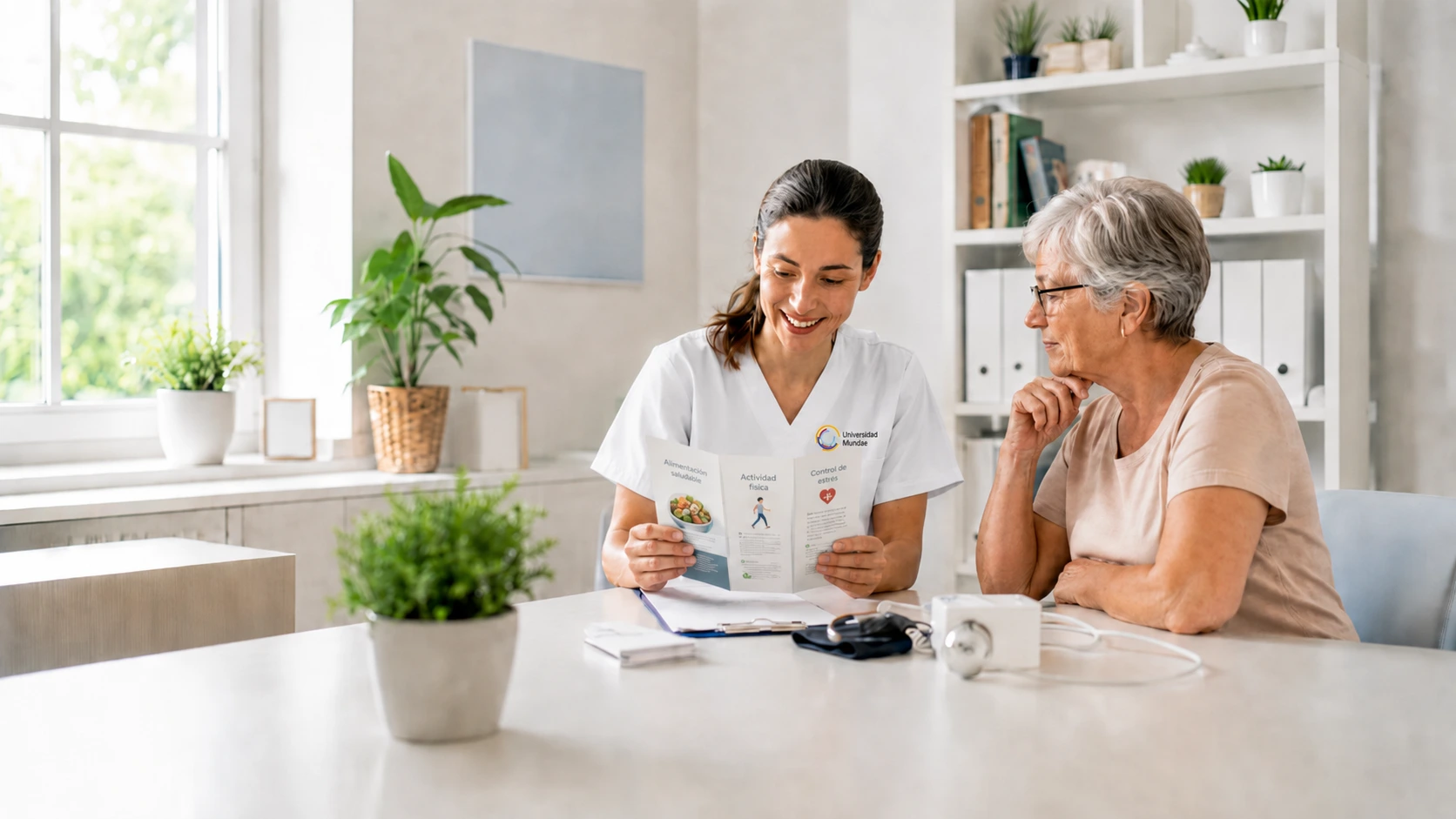
For years, much of the healthcare system has been valued for its ability to respond when the problem already exists: when pain appears, when an emergency arises or when a diagnosis forces action. But a decisive part of health is at stake much earlier, in prevention, in health education and in the continuous monitoring of people over time.
In this area, nursing occupies a strategic position. Not because it replaces other figures in the system, but because it is close to the patient, their environment and their evolution. The WHO reminds us that nurses and midwives are central to primary care and that, frequently, they are the first, and sometimes the only, healthcare professional a person sees.
What preventive nursing is
Preventive nursing is the part of care aimed at protecting health before complications appear, or at reducing their impact when intervention is still possible. It ranges from vaccination and health education to the monitoring of people with risk factors.
In public health, people often speak of three levels of prevention, and nursing plays a role in all of them. Primary prevention acts before disease exists, with tools such as vaccination or anti-smoking advice. Secondary prevention seeks to detect problems in early stages, when they do not yet cause symptoms, through screenings or regular clinical check-ups. Tertiary prevention works on an already established disease to prevent it from worsening, through the monitoring of chronic patients and the reinforcement of adherence to treatment.
The WHO stated in 2024 that global immunization efforts have saved at least 154 million lives over the past 50 years, a figure that shows the extent to which prevention can change the history of public health.
Why it is important
Many of today’s most significant health problems do not appear suddenly: they develop over years. The WHO estimates that noncommunicable diseases, such as cardiovascular diseases, cancer, chronic respiratory diseases and diabetes, caused at least 43 million deaths in 2021, which is equivalent to 75% of deaths not related to the pandemic. Of these, 18 million were premature deaths before the age of 70.
That is where preventive nursing makes a difference, in very specific situations: the nurse who adjusts the self-care plan of a patient recently diagnosed with hypertension, the professional who identifies a foot injury in a diabetic patient before it develops into something more serious, or the one who maintains follow-up after hospital discharge to prevent readmissions.
Care that happens outside the consultation room
An important part of preventive work does not happen during the consultation, but afterwards. Most of the time, the person is at home, at work, making everyday decisions about what they eat, how they move or how they rest. It is in that context that prevention becomes effective and where nursing acquires all its value.
Good professional practice is not limited to informing. It also helps the patient understand what is happening to them, why a treatment is important and how to integrate it into their daily life. That connection between clinical language and real life often marks the difference between a controlled disease and one that ends up decompensating. Its value is even greater when it enables the person to participate actively in their own care, whether by taking their blood pressure at home, recognizing which symptoms should not wait or detecting when an older person in their environment needs assessment.
Technology is expanding the capacity for monitoring and early detection outside the healthcare center. Recent reviews suggest that remote patient monitoring can reduce hospitalizations and facilitate the early detection of warning signs, especially in the follow-up of chronic diseases. When patients and their families understand their role, care no longer depends solely on the healthcare system and becomes a shared process.
Acting earlier to live better later
The WHO defines primary care as a comprehensive approach that ranges from health promotion and prevention to treatment, rehabilitation and palliative care. In practice, this definition means that, when prevention is done well, people maintain their independence, functional capacity and quality of life for longer.
The importance of acting in time is clear. The WHO estimates that 1.4 billion adults aged 30 to 79 were living with hypertension in 2024 and that around 44% did not know they had it. In diabetes, the same organization states that the number of people living with this disease reached 830 million in 2022. These figures reinforce an essential idea: prevention is not only about avoiding diseases, but also about preventing them from progressing late, poorly or with more impact than necessary.
Training nurses prepared to anticipate
If the healthcare system needs professionals capable of anticipating and not only reacting, prevention cannot be taught as accessory content. It has to be part of the way future professionals think and act from the beginning of their training.
At Mundae University, the University Degree in Nursing is designed with this logic: clinical practice from the outset, simulation with advanced technology and training oriented toward diverse healthcare contexts. The goal is to train professionals capable of acting when the problem already exists, but also of detecting the signs while there is still room to prevent it.
Discover our Nursing academic program

