


4 August 2026
The hidden signal of sudden cardiac death discovered by AI
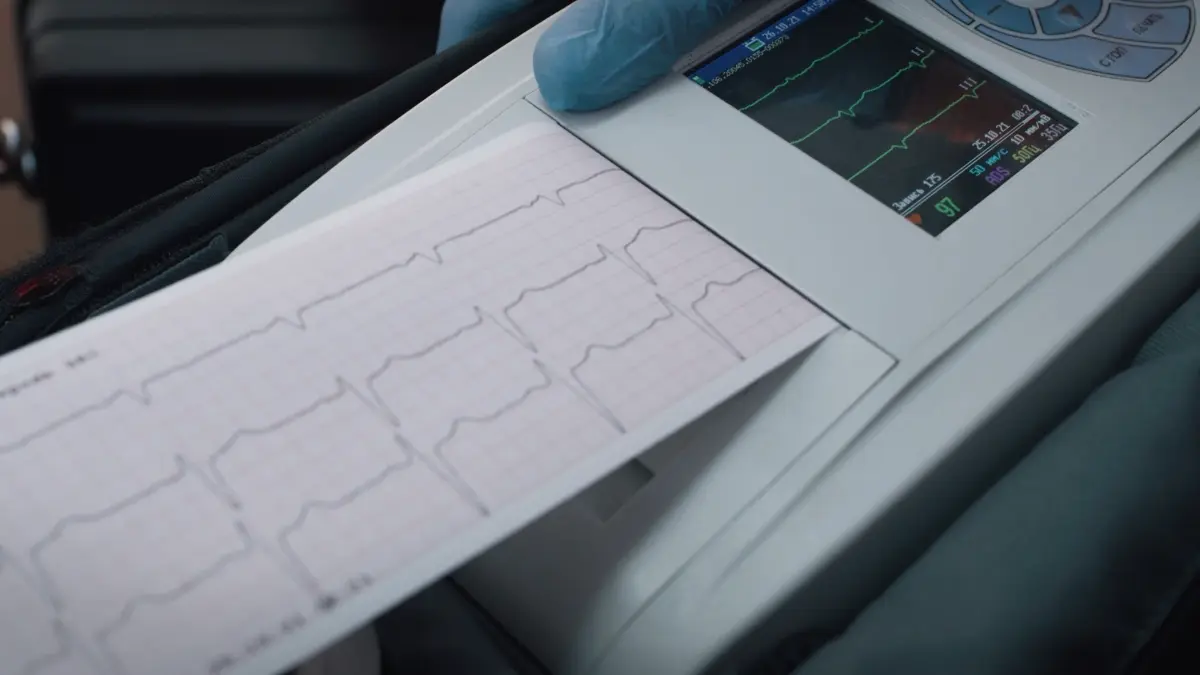
An electrocardiogram is a test that transforms the heart’s electrical activity into a series of readable lines that healthcare professionals have used for decades to identify arrhythmias, heart attacks, and other cardiac problems. However, a study recently published in Nature suggests that these curves contain a signal that had gone unnoticed until now: a small change in their shape capable of identifying people with a high risk of sudden cardiac death. The finding does not come from a new test, but from an artificial intelligence system trained to look differently at one of the most common examinations in medicine.
Sudden cardiac death occurs when the heart unexpectedly stops pumping blood, usually because a serious arrhythmia develops in its lower chambers, the ventricles. The electrical activity becomes disorganised, and circulation can stop within seconds. An implantable defibrillator can recognise these dangerous rhythms and deliver a shock to correct them, but its effectiveness depends on knowing in advance who is at sufficient risk to need one.
The main tool used to make that decision is left ventricular ejection fraction. It is usually measured with an ultrasound scan and calculates the proportion of blood expelled by the heart’s main pumping chamber with each beat. Put simply, a very low value may indicate a weakened heart and justify the implantation of a defibrillator. The problem is that most people who experience sudden cardiac death do not have a previously recognised reduction in this measurement. In addition, around two-thirds of the devices implanted according to this criterion never deliver a life-saving shock.
To search for a different signal, the researchers examined all electrocardiograms recorded between 2010 and 2016 in the Swedish region of Halland: 441,614 records linked to medical histories and death certificates. The deep-learning model was trained using 262,554 electrocardiograms from 75,157 patients and was then tested, without modification, on data that had been kept separate during its development. This allowed the researchers to check that the tool had not simply memorised the cases used during training.
During the evaluation, the AI classified 2.2% of the people analysed as high risk. In this group, the annual rate of sudden cardiac death was 7%, compared with 4.6% among people who already had reduced heart-pumping capacity. Most importantly, 86.1% of the people detected by the AI had not been identified using the usual criteria. In other words, the tool did not simply recognise patients who were already considered vulnerable; it identified other people whose risk may have been going unnoticed.
The researchers then checked whether the model also worked outside Sweden. They applied it, without modification, to more than 250,000 electrocardiograms from the United States and to a hospital registry in Taiwan. In both cases, it successfully recognised signals linked to serious disturbances in heart rhythm. This suggests that the tool was not merely identifying people in generally poorer health, but was detecting a specific risk connected to the heart’s electrical activity.
Even so, the AI was still producing a score without clearly explaining which part of the electrocardiogram it used to calculate it. To find out, the team created a second system that gradually modified the waves in the same recording, until it transformed a pattern considered low risk into one considered high risk. By observing which elements changed during the process, the researchers were able to locate the signal influencing the prediction.
The main discovery appeared in one of the twelve measurements that make up a conventional electrocardiogram. In people at higher risk, one of the waves ended in a smoother, more blurred way than usual. It was a small change, but consistent enough to attract the AI’s attention and to be associated with a higher risk of sudden cardiac death.
The signal is particularly interesting because it is visible on a standard electrocardiogram. It does not require a more sophisticated test or technology available only in specialist centres. The researchers measured this loss of sharpness mathematically and found that, on its own, it was associated with sudden cardiac death both among people studied in Sweden and those analysed in the United States. The AI therefore did more than classify records: it led researchers to a possible biomarker that can be observed, measured, and studied by other teams.
What could this change be reflecting? One hypothesis points to diffuse myocardial fibrosis, an accumulation of tissue similar to a scar between the heart’s muscle cells. This collagen does not conduct electricity in the same way as healthy tissue, so it may force the electrical impulse to travel along more irregular pathways. Among the small group of patients with available cardiac MRI scans, those who received the highest risk scores more often showed subtle signs compatible with this process. The relationship remains preliminary, but it provides a possible biological explanation for the newly identified shape.
The study also found that, among patients classified as high risk, those who already had an implantable defibrillator died 54.4% less often than the model predicted. The finding suggests that the new signal may help identify people who could benefit from the device, although it does not prove this on its own, because patients who receive a defibrillator are selected for clinical reasons that also influence their outcome.
The main limitation is that the analysis was based on past records and outcomes, while the definition of sudden cardiac death based on death certificates does not always reveal the exact final mechanism. Although validation across three countries and the specific link with arrhythmias strengthen the finding, a prospective randomised trial will still be needed to determine whether using the model actually reduces deaths without leading to too many unnecessary implants.
In conclusion, the advance reveals a role for artificial intelligence that goes beyond speeding up diagnoses or reproducing decisions already known. By combining a predictive model with another capable of transforming the waves, the researchers managed to turn a difficult-to-interpret prediction into a specific and visible signal. The electrocardiogram already contained that information; what was missing was a tool capable of recognising it and showing where to look. If future studies confirm its usefulness, a simple and widely available test could help identify people whose risk currently remains hidden at an earlier stage.

