


21 April 2026
Artificial Intelligence in Nursing: The Advancement Redefining the Profession
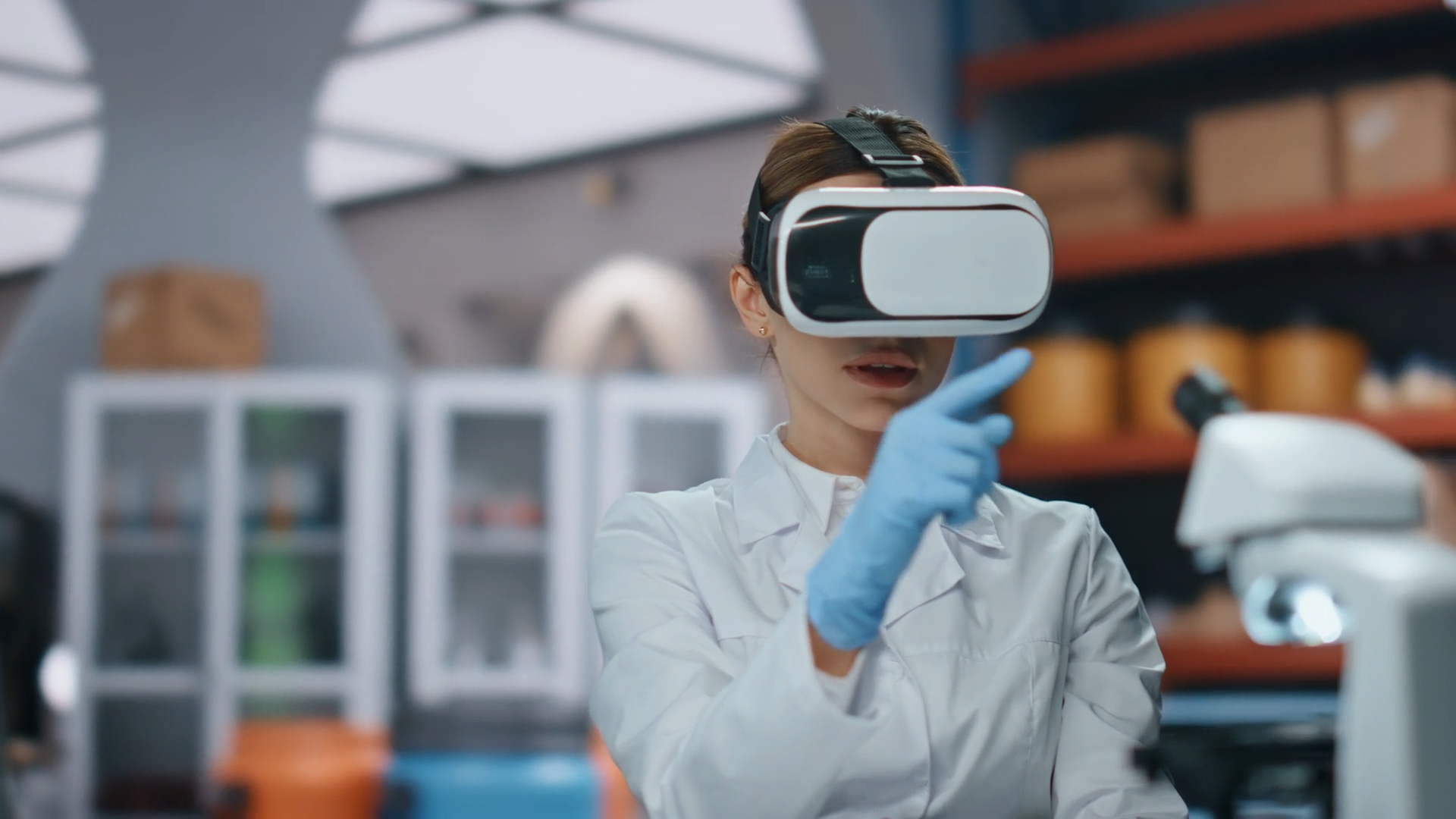
The 3rd National Congress on Artificial Intelligence in Nursing will address the impact of AI on healthcare practice
Just a decade ago, artificial intelligence was something completely removed from our everyday lives. A matter of laboratories, researchers and large tech companies. Today, a national congress on AI in nursing is already celebrating its third edition and brings together leading figures in oncology, healthcare cybersecurity and biomedical engineering on April 23, 24 and 25 in Elche.
But beyond the event, something has changed structurally: nursing no longer only manages care, but also data, algorithms and machine-assisted decisions. Artificial intelligence has entered hospitals, and it has done so precisely through the processes where nursing has the greatest presence: continuous monitoring, patient follow-up and real-time clinical data management.
What is already happening
Intelligent monitoring systems are already capable of detecting patterns that anticipate complications before professionals observe them clinically. Clinical decision support systems analyze volumes of data that no person could process manually. And the automation of administrative tasks such as record management, document handling or protocol tracking is giving nursing teams back time to dedicate to what no algorithm can do: accompany the patient.
These are not experimental scenarios. They are practices that are already being implemented in healthcare systems. Sessions such as the congress one about robots and AI for the nursing of the future or the projects presented by students of the IAcademia Master show that the nursing sector itself is not only adopting these tools, but developing them.
The less evident side: mental health and cybersecurity
However, not all the weight of artificial intelligence in nursing is concentrated in monitoring or data management. There are two areas that often remain outside the debate but deserve special attention: mental health and cybersecurity.
In the first, technology is opening therapeutic pathways that until now were inaccessible. Avatar therapy through virtual reality is showing promising results in addressing treatment-resistant auditory hallucinations, a field where traditional options are very limited. It is not about replacing the therapeutic relationship, but about expanding it with tools that reach where others cannot.
In the second, the digitization of medical records and the massive use of data raises risks that the sector cannot ignore. Protecting patients in the age of AI is not only a technical issue: it is an ethical responsibility that also falls on healthcare professionals who manage that information.
A shift in the professional profile
The incorporation of AI not only transforms the available resources, but also the role of nursing professionals. The profile moves toward more analytical functions: interpreting data, evaluating the performance of automated systems, and making informed decisions in complex technological environments.
This does not displace human competencies, it makes them more necessary. In a system where monitoring is continuous and information is abundant, the ability to contextualize, communicate, and accompany the patient becomes the human differentiator that no model can replicate.
The pending challenge: education
The most critical point of this transition is not technological, it is educational. The speed at which AI evolves surpasses the capacity of traditional curricula to adapt, and the gap between what is taught and what is encountered upon entering a hospital continues to grow. Healthcare education needs to incorporate real clinical experience that includes these technologies, advanced simulation, and digital competencies, not as optional subjects, but as a core part of the curriculum.
The congress points in that direction: dedicating a specific conference to productivity and intelligent learning for the new era of nursing is a sign that the sector is aware of the challenge. But true evolution begins in how those who have just decided to study this career are trained.
The key is no longer just to study nursing, but to train for a profession that is constantly transforming. The Nursing Program at Mundae University is designed to prepare you for the reality of a profession that already works with data, technology, and AI-assisted clinical decisions.
Where are we heading?
Predictive medicine, intelligent clinical records, virtual assistants for clinical support, or data-driven personalized care are not distant scenarios, they are trends that already have tangible implementations and that will consolidate in the coming years.
In this context, nursing holds a privileged position: it is the most continuous point of contact with the patient, and therefore the place where AI has the greatest capacity for direct application. The question is no longer whether nursing professionals will work with AI, the question is with what level of preparation they will do so.
Do you want to be part of this transformation?
Nursing is already at the center of this new healthcare reality. If you are thinking about studying an essential profession, with high employability and in full technological evolution, the university Nursing program prepares you to be at the center of this change.
Discover the Nursing Program at Mundae University and access training aligned with what really happens in hospitals Programa de Enfermería de la Universidad Mundae
→

