


11 June 2026
How to choose a career without getting into panic mode after the PAU
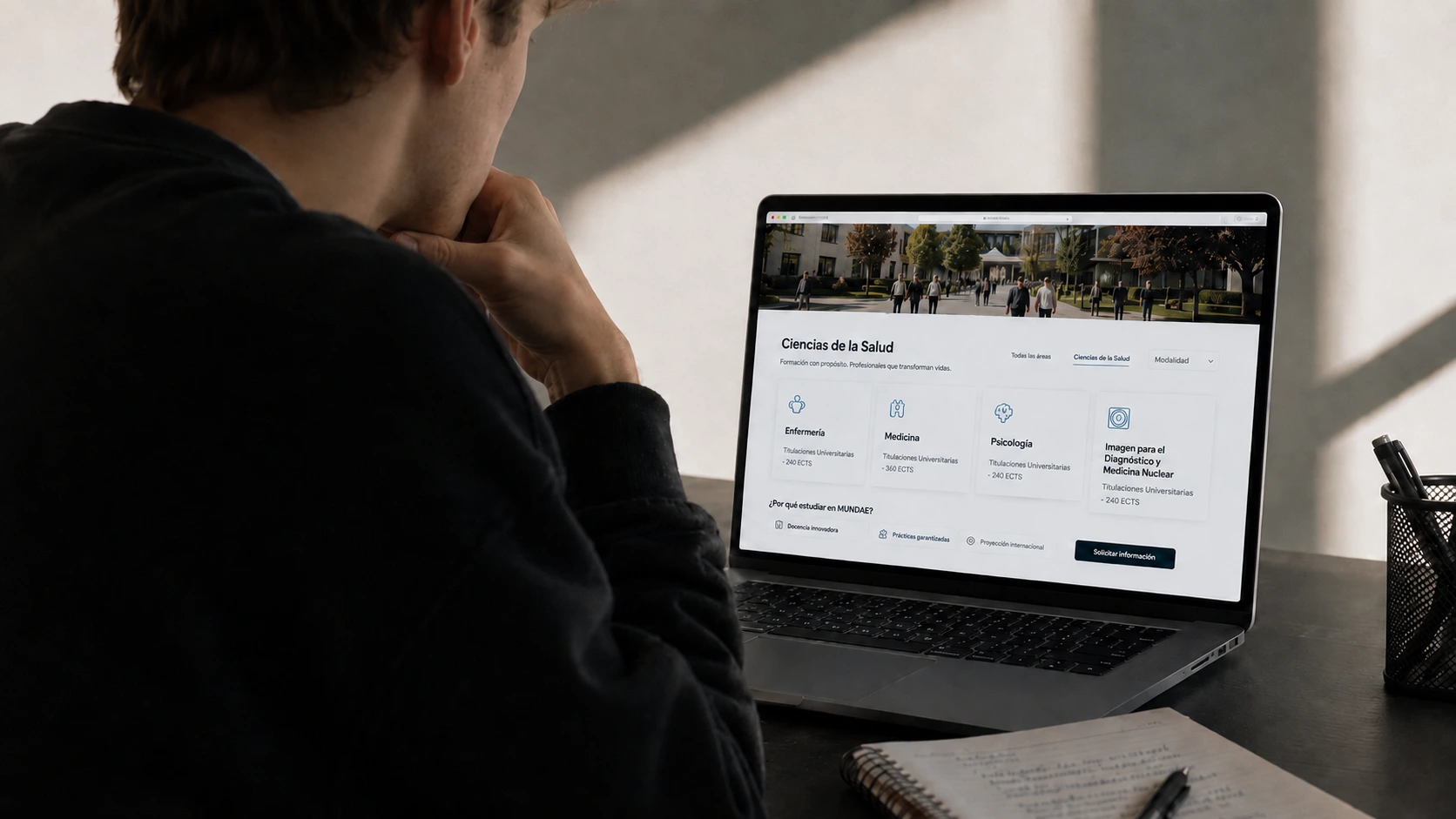
There is a highly inadvisable way to choose which degree you want to study: with ten tabs open, three WhatsApp conversations at once, a grade table, or your mother saying "Look first at what has the most job prospects" from the living room.
That moment is common, but we always experience it as a countdown. Everything seems urgent and definitive. Everything seems to tell you that if you don’t decide now, someone else will take your future before you do.
But the real problem is not that you have to decide, it is the state from which you are deciding.
The danger of choosing under pressure
When the brain perceives urgency, it switches modes. It stops calmly comparing options and starts looking for quick exits. The one that seems most familiar or sounds safer.
It’s not that you deliberately take a wrong direction. What happens is that when fear of the unknown appears, any alternative that offers security gains an advantage. In that state, what seems most reasonable is usually what reduces those nerves first, even if it is not always what fits you best. Because, in the end, the most accurate stance is usually the one taken with the best possible information: about the degree, yes, but also about yourself.
Seek guidance, not approval
There comes a point where going around in circles doesn’t help clarify ideas. It only increases the feeling that you lack data: another university, another ranking, another video, another opinion. And the more overinformation, the more blurred everything becomes.
Before opening another website, it’s worth taking a pause and a cleanup. What information do you really need to decide on a degree? What data can change something in your choice? Are you consulting just because you have anxiety?
Not everything that appears on Google or ChatGPT deserves your attention. A good starting point is not the one that accumulates infinite information, but the one that knows which information is relevant and which only distracts you.
Eliminate the noise before moving forward
Panic turns any choice into an urgency. And when something seems urgent, the temptation to resolve it as soon as possible, like that pending message we reply to just to get it off our chest, can lead to wrong decisions.
There are dates, applications, and lists. But within those limits, not everything has to be resolved in one afternoon. Separating the process helps: first discard what clearly isn’t for you, then compare the options that are feasible, and only at the end, order preferences. Because giving yourself time and organizing is not procrastinating. It is avoiding a very specific trap: making a decision just to end the uncertainty as soon as possible, instead of doing it to start with conviction.
Look at the journey, not just the goal
One of the effects of making decisions from anxiety is that we tend to imagine only the final and idealized version of the profession: the job, recognition, stability. But before getting there, there are years of study, rhythms, demands, and ways of learning that must also be weighed in the balance. That’s why it’s not advisable to ask only what attracts us about a degree, but also which aspects could make us reconsider it later.
Some questions help reach that idea: Am I really interested in the content of the subjects or only in the profession that comes after? Am I willing to study for years subjects that might not resemble the image I have of the real job? Do I see myself maintaining the level of demand of this degree when the initial motivation disappears? Does it fit my way of learning or am I choosing it just because it seems a safe option?
Answering these questions doesn’t eliminate doubts; in fact, it may create some more, but it forces you to look at the choice from a more concrete and honest place. If the appeal of the profession you want runs parallel to the effort and commitment it entails, you are probably already choosing from a much more solid base.
Order and criteria
When you choose under pressure, it’s easy for each option to be valued from a different criterion. One day professional prospects weigh more; the next, the city or the opinion of someone close; later, the grade or the feeling of security. That way, the list starts to move according to the concern of the moment and not according to stable criteria.
To avoid this, it’s advisable to choose three or four requirements before ordering the list. The important thing is to apply those same criteria to all options, not to change them according to the degree or the institution.
Some questions can help you check this: Would I still choose the same if it had fewer job prospects? What does the degree have to offer me from the start to feel that the path makes sense? What aspect worries me and do I need to check before putting it among my top options?
When the criteria are clear, all preferences are measured with the same yardstick. That reduces impulsive changes and helps distinguish between a reasonable doubt and a passing fear.
The perfect decision doesn’t exist, but making it automatically can be avoided
It’s important to accept that it’s not possible to eliminate all uncertainty. Not even by following all the advice you find will you be able to know if you are really choosing the right degree, because no university or counseling can guarantee that in four years you will think exactly the same as today. And that’s okay.
But you can avoid ticking a box without conviction: because someone rushes you, because an option sounds good from the outside, or because you don’t want to disappoint others.
Between June and September, choosing a degree can feel like a second test: there are no notes or exams, but there are deadlines, lists, comparisons, and the feeling of taking a step in the dark. Precisely for that reason, it’s advisable not to turn that countdown pressure into the only criterion. Your university path deserves more than an automatic answer; it deserves criteria and clarity beyond all that external noise.
At Mundae, this stage shouldn’t feel like a race against the calendar. You have space to ask, contrast, and doubt, and someone on the other side who accompanies you before you take the step. The important thing is not to decide quickly, but to decide well.
```

