


30 June 2026
Natural disasters and health: how to respond to a health emergency
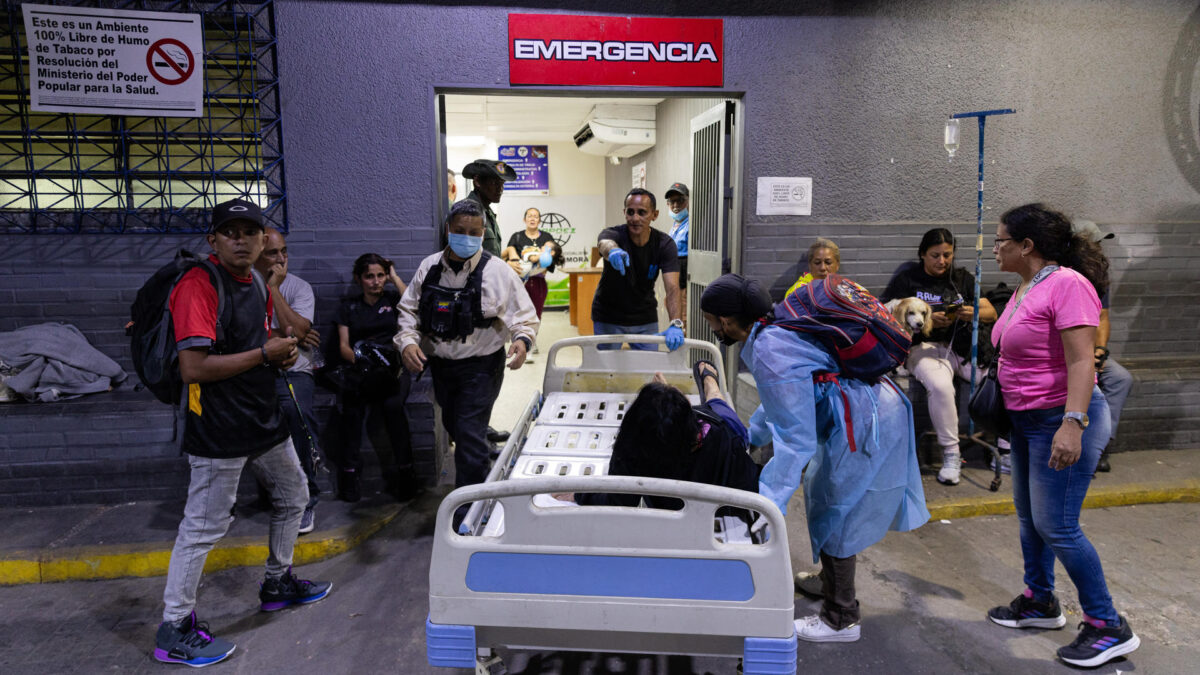
Photography: Rayner Peña / EFE
The earthquakes recorded in Venezuela have once again brought attention to a reality that appears after every major natural disaster: a crisis of this kind does not only affect buildings, roads or homes. It also shakes the response capacity of the healthcare system. In a matter of minutes, hospitals, health centres, rescue teams and professionals move from working as usual to facing a scenario marked by pressure, uncertainty and the need to make quick decisions.
In a seismic disaster, attention often focuses on collapsed buildings and the search for survivors. That is understandable: an essential part of the initial response takes place there. But the healthcare dimension begins even before patients arrive at a hospital. Emergency teams must locate, assess and stabilise the most critical cases while also organising transfers to the care points that are still functioning. At that moment, maintaining order is not optional: it is a condition for saving lives.
Triage becomes one of the most important tools. Classifying patients makes it possible to identify who needs immediate care, who can wait, who requires urgent evacuation and which resources should be activated first. This is a familiar task, but in highly pressured situations it can become especially complex: there may be multiple victims, interrupted communications, blocked roads or damaged infrastructure, forcing professionals to work with the real environment in front of them rather than the ideal scenario described in protocols.
That real environment shows its full complexity as patients begin to arrive at care points. Not everyone presents the same type of injury or needs the same response. Trauma, fractures, crush injuries and bleeding may be accompanied by respiratory complications, wounds requiring immediate treatment and patients who need observation. Some cases require emergency surgery; others need stabilisation, immobilisation, pain relief or antibiotics. All of this happens, moreover, at a particularly difficult time for hospitals, which may receive a far higher volume of patients than usual while also facing structural damage, power cuts, water shortages, access problems or loss of medical supplies.
In a large-scale emergency, the healthcare system has to reorganise quickly. It is not enough to open more beds or reinforce the emergency department: teams must identify which centres remain operational, concentrate certain services in the facilities with the greatest capacity, transfer patients when necessary and request external support wherever care cannot be maintained with available resources. In this context, field hospitals, mobile clinics, advanced medical posts and community care units are essential when healthcare buildings are overwhelmed or do not offer safe conditions.
Continuity of care is another major challenge in this type of situation. An earthquake does not only disrupt the lives of those who have suffered a visible injury at that moment; it also affects people with pre-existing conditions, such as diabetes, cancer, hypertension or psychiatric treatments. If these groups lose their medication, are unable to access it or cannot attend a check-up, the health risk increases, even if it does not stem from an injury caused directly by the earthquake. The same applies to pregnant women, newborns, older people, children, dependent patients and citizens with disabilities.
Once the first phase of rescue and urgent care has been overcome, maintaining hygiene and sanitation conditions becomes especially important. Refuge areas, improvised shelters and mass displacement can create new problems if drinking water, sanitation, sufficient food and access to basic services are not guaranteed. Infection prevention, epidemiological surveillance, vaccination when necessary and outbreak control are part of the healthcare response just as much as emergency surgery. An emergency does not end when the last trapped person is rescued: it continues while the population is still living in precarious conditions.
When an emergency continues over time, the healthcare response also needs to be reinforced with good communication. In situations marked by fear, loss and rumours, communicating well can prevent risky behaviours, reduce unnecessary movement and lower collective anxiety. Health authorities and teams on the ground must explain where to go, which centres remain available, how to protect oneself from possible aftershocks, when to seek medical care and which measures to follow in shelters or damaged areas. This information must be clear, understandable and adapted to the population, because if it arrives late or contradicts itself, disorientation increases.
Mental health is part of that same response. An earthquake can involve grief, shock, insomnia, anxiety or stress. Children may struggle to understand what has happened; older people may feel disoriented, and those who have lost their home or close relatives may need support. In addition, healthcare professionals themselves work under enormous pressure: long shifts, emotionally intense scenes, difficult decisions and scarce resources. Caring for professionals too is a safety measure for maintaining the healthcare system.
That need for order must also extend to teamwork between services. In a disaster, healthcare services do not act alone: they need to coordinate with rescue teams, civil protection, local authorities and organisations that provide logistical or community support. If each group works separately, efforts may be duplicated in one area while others are left without sufficient care. That is why an efficient response requires shared criteria, clear communication channels, patient registration, organised distribution of resources and a structure that makes it possible to set priorities without wasting time.
This coordination must also respect the local context. External teams can provide experience, equipment and technical capacity, but they need to work with professionals from the country, understand the existing healthcare organisation and adapt to the cultural, linguistic and social conditions of the affected population. The most effective help is not the one that arrives with the greatest visibility, but the one that integrates best into the real needs of the territory.
Earthquakes show starkly that healthcare is not always practised in controlled spaces, with sufficient resources and predictable protocols. Sometimes care has to be provided in a street, in a shelter or in a damaged hospital. In those scenarios, technical knowledge remains essential, but it needs to be accompanied by judgement, communication, teamwork, cultural sensitivity and adaptability.
That is why the training of future healthcare professionals cannot remain purely theoretical. Preparing to work in the healthcare environment means understanding clinical practice, knowing how different health systems operate and learning to function in diverse settings. An international perspective that is close to reality helps train healthcare professionals who are able to respond not only when everything is organised, but also when the context changes abruptly and the priority is to act with rigour, humanity and clinical judgement.

