


2 June 2026
Nicotine that does not always look like tobacco: vapes, pouches and the new aesthetics of addiction
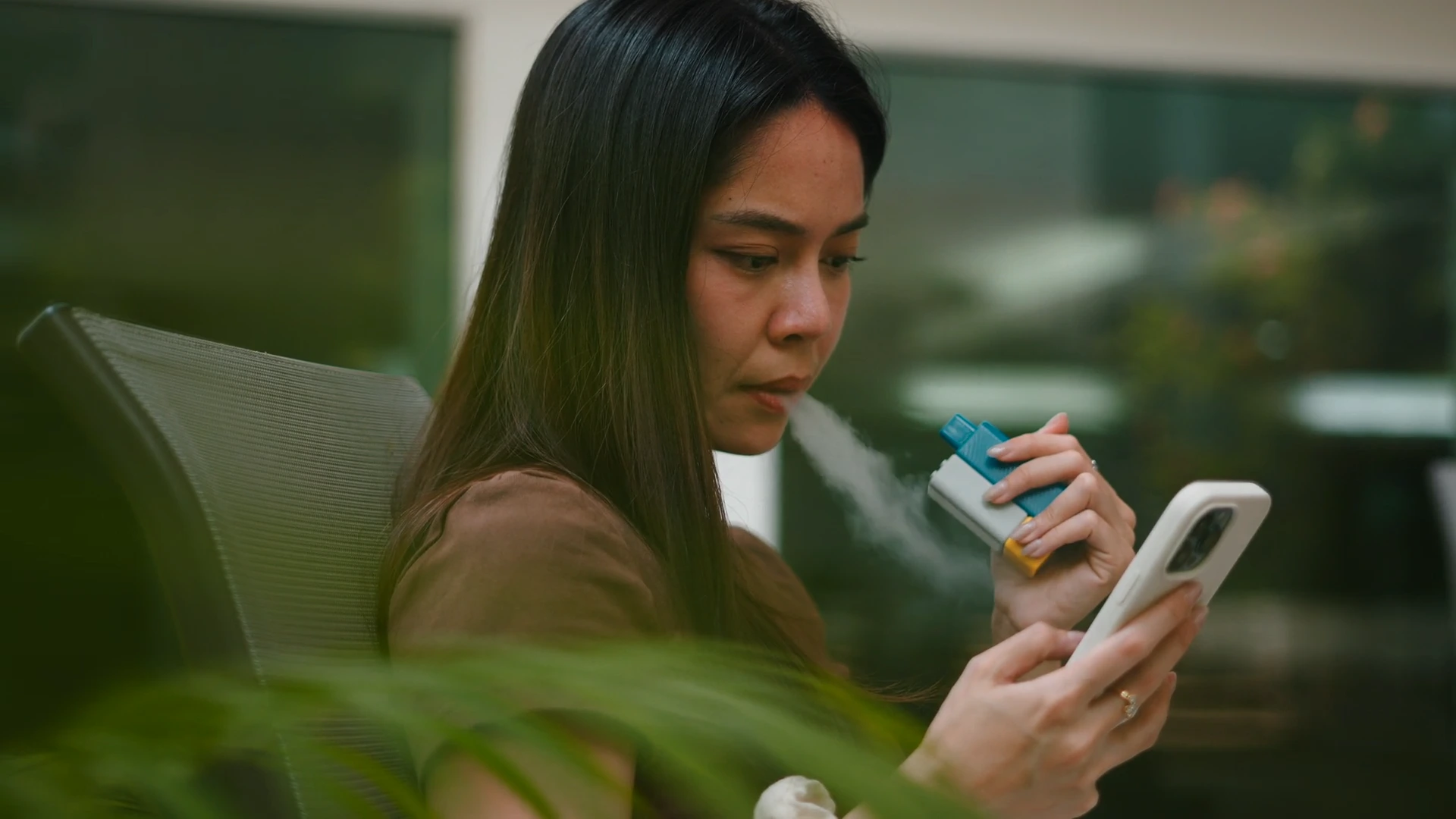
Talking about nicotine has always meant thinking almost automatically about cigarettes, smoke, ash, the smell on clothes and packs with health warnings. The image was recognisable, aggressive and increasingly less socially accepted. But that association is starting to fall short. Today, nicotine can also come in a colourful device, in mango-flavoured vapour, in a small white pouch placed between the lip and the gum, or in a product that does not even contain tobacco leaf.
The problem is not only that the formats have changed, but that the way they are perceived has changed too. Some of these products are presented as more modern, more discreet, cleaner and, for that very reason, less harmful in the eyes of many consumers. They do not always smell, they are not always visible and they are not always recognised for what they are: ways of delivering a harmful substance with a strong addictive capacity.
In Spain, the phenomenon has also gained ground. According to the latest data published by the Ministry of Health, the use of electronic cigarettes remains high among students aged 14 to 18: in 2025, 49.5% reported having used them at some point, although the figure had fallen from the 54.6% recorded in 2023. The figure has improved, but it still points to a very strong presence of vaping at an early age.
The smoke disappears, but the risk does not
One of the major cultural shifts brought by new nicotine products is that they separate addiction from the traditional aesthetics of tobacco. Combustible cigarettes are associated with disease, ageing, bad smell and prohibition. By contrast, many vapes and nicotine pouches fit into visual codes much closer to technology consumption, wellness or even lifestyle.
That difference matters, because if something seems less dangerous, it is easier to try. If it can be used without lighting anything, without leaving an obvious trace and without sharing the space of the traditional smoker, that social barrier is also reduced. And if it is also wrapped in flavours, minimalist designs or social media videos, the perception of risk can become even more diluted.
The World Health Organization has warned that electronic cigarettes are promoted with attractive designs, a presence on social media and among influencers, and a huge variety of flavours. According to the WHO, there are at least 16,000 flavours for these products, some with designs that may resemble toys or everyday devices.
This is not just an aesthetic issue. The way a product is presented shapes how it is interpreted. A dark pack and a visible health warning generate one reading. A shiny, rechargeable device, with a sweet flavour and associated with leisure, generates another.
The same substance in a different package
The debate around these products is often mixed with an idea that is partly true, but incomplete: some devices may expose users to fewer toxic substances than conventional cigarettes if they completely replace combustible tobacco in adults who already smoked. But that comparison should not be confused with harmlessness.
The health question is not only whether a product is "less harmful than smoking". It is also who uses it, at what age, how often, and whether it introduces non-smokers to nicotine use. In adolescents and young people, nicotine raises particular concern because the brain is still developing and the circuits linked to reward, impulsivity and learning are especially sensitive to addictive substances.
And when consumption becomes frequent, the product stops being a curiosity and becomes a routine: after eating, after class, in the bathroom, at a party, before going to sleep or whenever anxiety appears.
The damage shown in data
Unlike combustible cigarettes, which stain teeth and leave a smell, vapes and pouches do not visibly mark the body in the short term. That has fuelled the idea that "nothing happens". But clinical evidence is showing otherwise.
In 2019, the United States recorded a massive outbreak of EVALI, "e-cigarette or vaping product use-associated lung injury". A disease that can appear after only days or weeks of use and required the hospitalisation of 95% of those affected, with 58% admitted to intensive care. By February 2020, the CDC had recorded 2,807 hospitalised cases or deaths from EVALI and 68 confirmed deaths in the United States. In Spain, the first case was published in May 2026: a university student from Barcelona who had replaced cigarettes with a vape and developed a pulmonary haemorrhage a few weeks later.
Beyond EVALI, there is already consistent data on lung inflammation, lipoid pneumonia caused by inhaling oils and endothelial dysfunction, as well as concern about the respiratory impact of some compounds used in certain flavourings. However, the long-term effects, those that may take twenty or thirty years to appear, have not yet had time to emerge in a population that has only been using these products for barely a decade. But just because the damage is not visible does not mean it is not happening.
Vapes: flavour, design and habit
Vaping has become the most visible face of this new stage. Not all electronic cigarettes contain nicotine, but a large majority do, and users do not always have clear information about the composition, concentration or dose that the body actually absorbs. In addition, disposable formats and pods have made consumption more immediate, portable and less ritualised than traditional cigarettes.
In the United States, 2024 data showed that current e-cigarette use among middle and high school students fell from 7.7% to 5.9% between 2023 and 2024, but among those who did vape, there were concerning patterns of use: 38.4% used them frequently and 26.3% used them daily. In addition, 87.6% of young users consumed flavoured products, especially fruit, candy and mint.
That figure helps us look at the phenomenon more precisely. It is not enough to know how many young people have tried it. It also matters how many incorporate it into their daily lives. Dependence does not always begin with a conscious decision to "get hooked"; very often, it starts with social, apparently controlled use that gradually becomes automatic.
Nicotine pouches: invisible addiction
One of the most recent formats in this evolution is nicotine pouches. They are small sachets placed in the mouth that release nicotine through the oral mucosa. They do not produce smoke, they do not require a device and they can be used very discreetly. That is precisely why they are concerning: because they allow nicotine consumption in contexts where smoking or vaping would be less viable.
In May 2026, the WHO warned about the growth of nicotine pouch brands and their targeting of young audiences, also noting that some products are sold in strength levels presented as "beginner", "advanced" or "expert", with labelled amounts of up to 150 mg of nicotine, and insisting that they should not be considered risk-free products.
A recent study, on the other hand, points to a change in pattern. A study published in JAMA Network Open found that, among US students in 10th and 12th grade, lifetime use of nicotine pouches rose from 3.0% in 2023 to 5.4% in 2024, while past-month use doubled from 1.3% to 2.6%. The study also detected an increase in the combined use of pouches and electronic cigarettes.
This creates a new scenario: we are not only facing the replacement of cigarettes with another product, but an increasingly diversified market in which the same person can alternate between different nicotine formats depending on the moment, the place or the social group.
Prevention needs to be updated
For decades, prevention was built around cigarettes. And it worked, in part, because the enemy was visible: smoke, smell, ashtrays, lighters and packs. That is no longer enough.
That is why prevention messages also need to be updated. Simply saying "do not smoke" is no longer enough when part of the consumption is not even perceived as smoking. Health education must explain what nicotine is, how it works and why it generates dependence, but also how products are designed to be attractive and what role is played by flavours, availability, influencers and low risk perception.
Old addictions with a new image
That is the current paradox: the less it looks like the cigarette we have always known, the easier it can be to underestimate its impact. The challenge for public health is not only to regulate new products, but to learn how to recognise new forms of normalisation.
Because the new formats promise modernity, discretion and self-control, and they deliver on almost all of those promises. All except the most important one: to stop having an impact on health.

