


25 August 2026
Detecting an overdose and acting without assistance: how a new smart patch works
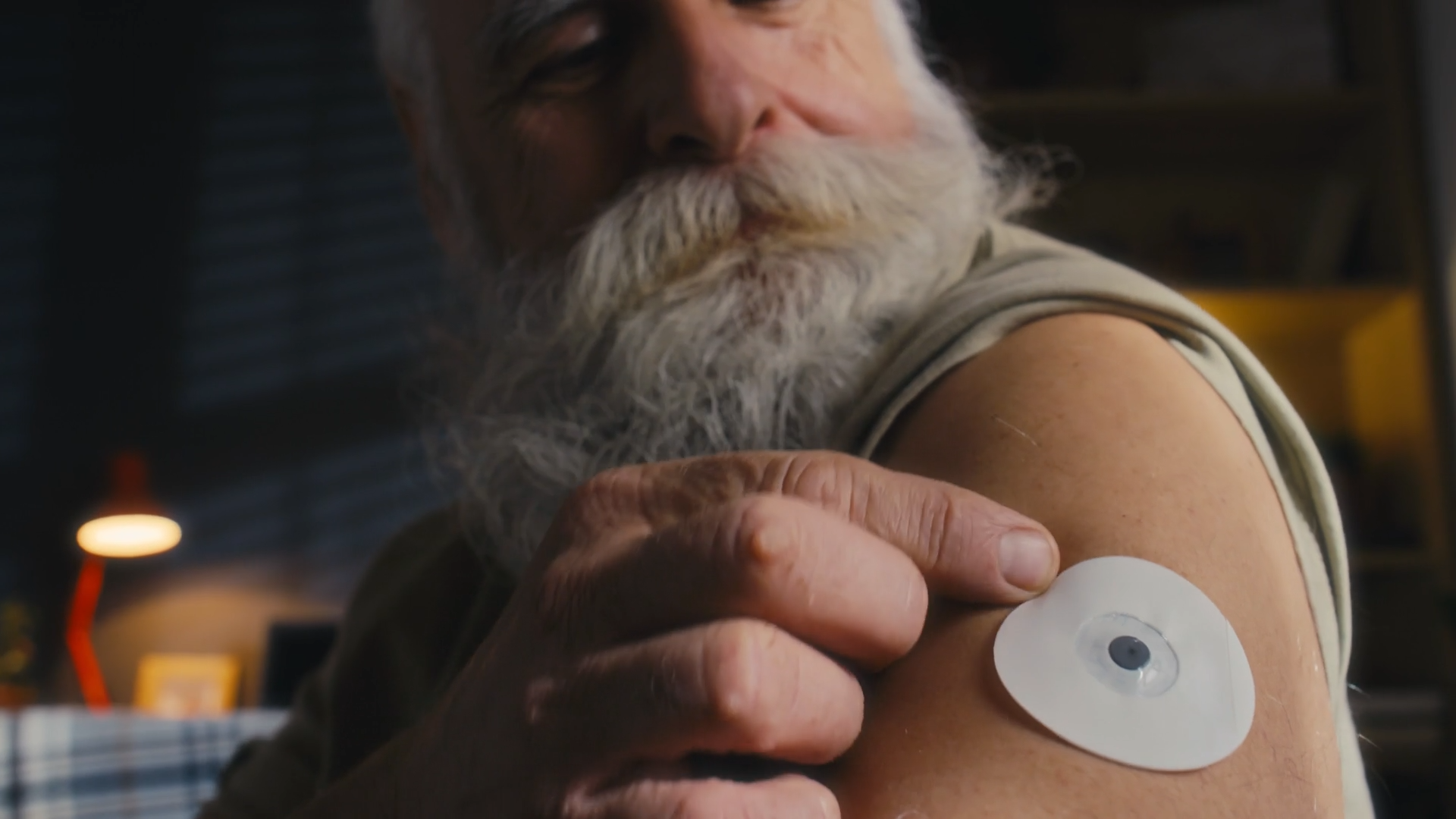
A person experiencing a severe opioid overdose can quickly lose the ability to react, call for help or administer medication on their own. At that point, survival may depend largely on someone recognizing what is happening and intervening in time, but what if a device placed on the skin could detect the problem and automatically begin treatment?
That is the proposal from a team of researchers at Indiana University, who have developed a wearable system capable of monitoring breathing, using deep learning to identify patterns consistent with an overdose and automatically administering naloxone. The first results, published on August 24, 2026, in Nature Communications, show that the prototype can reverse the effects of fentanyl in mice. For now, therefore, it remains an experimental technology that has not yet been tested in humans.
The importance of time
Opioids are essential medicines for pain management in certain situations, but when they reach excessively high concentrations, they can depress the respiratory system to the point where breathing becomes dangerously slow or stops altogether. Fentanyl, moreover, is a particularly potent synthetic opioid and is responsible for a significant proportion of overdoses involving these substances in the United States.
Naloxone can temporarily block the effects of opioids and, in doing so, reverse a potentially fatal situation when administered quickly. It is currently available in forms such as nasal spray and injectable formulations, making it easier for people nearby to use it. However, both depend on one obvious condition: someone has to notice what is happening and take action.
This limitation is particularly relevant given that opioid use often takes place when a person is alone. Although the figures have begun to decline in the United States, the scale of the problem remains considerable. Provisional data from the Centers for Disease Control and Prevention (CDC) estimated 69,973 drug overdose deaths in 2025, around 44,564 of which involved opioids.
The aim of the new device is not to develop another medication, but rather to reduce the time between the onset of respiratory depression and the delivery of treatment.
Observe, interpret and respond
The prototype combines several technologies in a closed-loop system. This means that it does more than simply measure a signal or release a drug: it collects information, interprets it and responds according to what it detects.
The first part focuses on breathing. The researchers used respiratory signals to train a learning model capable of recognizing changes associated with the effects of fentanyl. The algorithm was developed using data collected from 78 mice, with the aim of identifying deterioration before it reached a more obvious threshold.
In the experiment, the system detected the episode around 11 minutes earlier than a reference method that waited until minute ventilation had fallen by 50% from baseline. This difference is especially relevant because, in severe respiratory depression, time influences how far oxygen deprivation can progress before treatment begins.
The value of this approach therefore lies in recognizing a combination of physiological changes rather than simply waiting for a single variable to reach a predefined limit.
Acoustic waves to deliver the medication
Once the situation has been identified, the second part of the device comes into action. The research team integrated an acoustofluidic system into a small 3D-printed structure, using acoustic waves to control the movement of liquids on a small scale.
In this case, those waves generate the flow needed to transport naloxone through a small channel and deliver it through a tip that penetrates the skin. In the animal tests, the prototype administered 1.5 milligrams in approximately three minutes. It is therefore not a patch that slowly releases a substance, as some transdermal patches do, but rather an active mechanism designed to begin drug delivery when the system detects an emergency.
This combination is one of the most striking features of the study: the same device brings together monitoring, automated analysis and a therapeutic response, so that none of these stages necessarily depends on another person being present.
Testing with fentanyl
The researchers experimentally induced respiratory depression using fentanyl and compared the algorithm with a conventional threshold-based system. According to the results, the intelligent model not only identified the problem earlier, but also reduced by approximately 11 minutes the amount of time the animals remained in respiratory depression and decreased the overall severity of these episodes.
In addition, once administration of the antidote was activated, the animals recovered their respiratory parameters. The authors therefore conclude that the prototype successfully reversed the effects of the drug in this experimental model and that combining early detection with rapid drug delivery could represent a promising avenue of research for responding to this type of emergency.
However, there is a fundamental difference between showing that a technology works in mice and turning it into a medical device for humans. The study does not yet demonstrate that it can prevent overdose deaths in people, nor does it show how the algorithm would perform across the enormous variety of situations that occur outside a laboratory setting.
From the laboratory to a device people could actually wear
Before clinical use could even be considered, researchers would need to determine, among other things, whether the system can accurately recognize human respiratory patterns, avoid incorrect activations, deliver an appropriate dose of medication and operate safely over longer periods of time.
It is also particularly important to distinguish an overdose from other changes in breathing. Sleep, certain medical conditions and many everyday situations can alter physiological parameters. Administering naloxone when it is not needed is not completely harmless for everyone: in someone who is physically dependent on opioids, it can trigger acute withdrawal symptoms, which is one reason why these systems require sufficiently reliable detection.
Other less striking but equally essential aspects of any medical wearable will also need to be studied, including battery life, comfort, drug stability, skin response and ease of use, as well as how the device performs during normal movement and under real-world conditions.
For that reason, the significance of the study does not lie in imagining that simply wearing a small device on the body will soon be enough to provide protection. Its contribution lies elsewhere: turning a response that currently depends on someone recognizing an emergency and acting from the outside into a process that could one day be initiated by the device itself.
While that possibility continues to be investigated, a suspected opioid overdose remains a medical emergency. Naloxone that is currently available can save lives when administered in time, but urgent medical assistance is still necessary. The new prototype does not replace these measures; instead, it raises the possibility that, in the future, technology could begin to act during the critical minutes when no one else has yet been able to intervene.
Another question would be who could realistically benefit from wearing this type of device on a regular basis. Its usefulness seems clearer for people with a known risk of opioid overdose, but many overdoses can happen unexpectedly, because of occasional use, an accidental combination of substances or a drug whose composition was unknown. In those cases, the person is unlikely to already be wearing a system specifically designed to respond to that emergency. The fact that the technology can act, therefore, does not guarantee that it will be available at the exact moment it is needed, something that will also need to be considered when assessing its real-world impact beyond the laboratory.

