


2 July 2026
The risk of screen use before the age of two
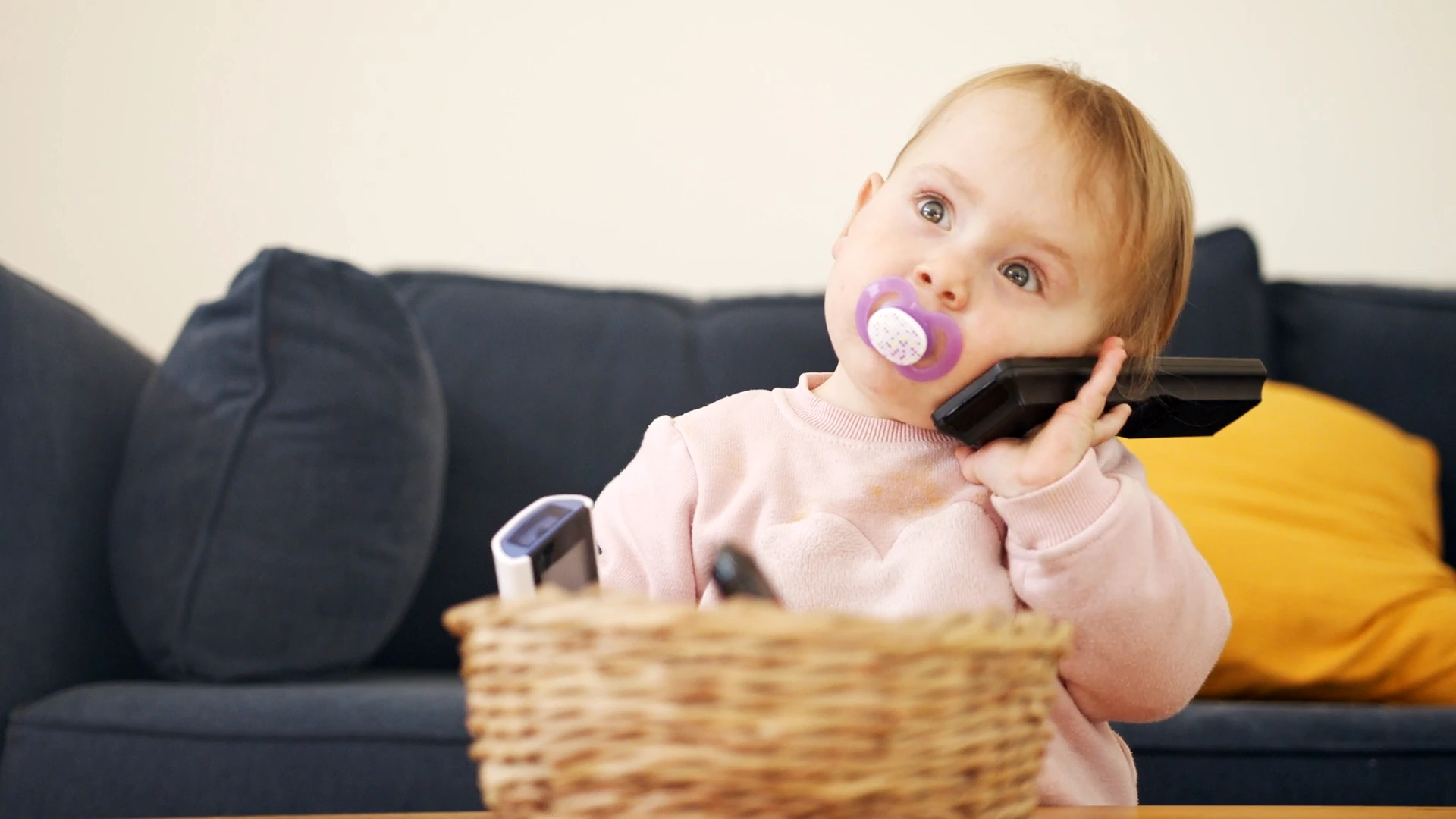
A baby looking at a phone during mealtimes, cartoons on a tablet to get through a wait or avoid a tantrum, or videos playing one after another before bedtime are increasingly common scenes. But they also raise an important question for many families: what happens when screens become part of a child’s life almost from birth, precisely at a stage when the brain is still learning to look, listen, move, speak and regulate itself?
A study published in June 2026 by researchers from British universities, including University of Leeds, Leeds Trinity University, Aston University and Loughborough University, has explored this issue in depth. The work analyses screen use during the first 1,001 days of life and recommends avoiding intentional and regular use in children under two, after finding an association between this early exposure and possible risks in language, sleep, bonding with the environment, emotional regulation, visual health and obesity. The message is not about blaming families, but about remembering that the digital environment has changed faster than our ability to understand its effects, especially in the first years of life.
Several international guidelines agree with this recommendation, including the World Health Organization, which advises that children under one should not spend sedentary time in front of screens and does not recommend this exposure in one-year-old children either. The American Academy of Pediatrics also discourages the use of digital media before 18 months, except for occasional video calls with relatives or close contacts.
The importance of real interaction
The first two years are an especially important and sensitive period. Babies learn through their body and through relationships: they look at faces, recognise voices, respond to gestures, explore, move, point and wait for a reaction. Each of these experiences helps build brain connections.
A screen can capture attention, but it does not respond like a person. It does not adjust its rhythm to the child’s gesture, interpret their babbling or turn a small action into a conversation. Even when the content seems educational, early learning depends heavily on human interaction. At this age, seeing a word or hearing a song is not the same as sharing an experience with an adult.
That is why the risk is not only in the screen as an object. It is also in what it means at a cognitive level. If the device replaces conversation, play, movement or eye contact, it reduces essential opportunities for development.
Less exchange, fewer words
One of the areas with the strongest evidence is language. In 2023, a study published in JAMA Pediatrics analysed more than 7,000 children and observed that greater screen time in one-year-old children was associated with a higher likelihood of later delays in communication and problem-solving at ages two and four. The research does not prove that screens are the only cause, but it does point to a relevant relationship between early exposure and development.
Another study, published in JAMA Pediatrics in 2024, followed 220 Australian families and measured the language environment of children aged 12 to 36 months. The results were clear: more screen time was associated with fewer words heard, fewer vocalisations and fewer conversations between adults and children.
And this matters because language is not learned through passive exposure. A child needs to listen, try sounds, repeat, make mistakes and receive responses. When screens take up part of that time, opportunities to practise the exchange that supports speech decrease.
Sleep, calm and everyday habits
The way screens can interfere with basic routines is another of the harmful aspects that has been studied. Before bedtime, visual and sound stimuli can increase activation and make it harder to switch off. In children under two, rest plays a central role in brain maturation, memory, growth and emotional regulation.
Another sensitive point is the use of a phone or tablet as a tool for calming down. In the short term, it can work: crying stops, mealtimes move forward or a journey becomes easier. But if it becomes a regular response, the child may get used to regulating discomfort through an intense external stimulus. This leaves less room for other forms of support, such as putting words to what is happening, getting through a tantrum, offering a real object, singing, moving or waiting.
Content and context
A common question is whether educational videos change this picture. They may be preferable to fast, chaotic or inappropriate content, but they do not solve the main problem. In children under two, learning needs context, repetition and relationship. Naming an animal on a screen does not have the same value as seeing it in a book, pointing to it with an adult, imitating its sound or receiving a response.
That is why, rather than dividing uses into “good” and “bad”, it is worth looking at whether the screen opens up an interaction or replaces one. A short video call with a grandparent, accompanied by another person, may make sense because there is response, eye A short contact and conversation. Looking at family photos and commenting on them together can also become a shared experience. By contrast, leaving a platform on autoplay for long periods encourages passive exposure and displaces other activities.
No guilt, but clear limits
The conclusion is that talking about screen use in babies requires avoiding extremes: minimising the issue or turning it into a permanent alarm. The available evidence points to one idea: before the age of two, the less intentional and regular use, the better. This does not mean that an occasional moment will harm development or that families should feel guilty for sometimes turning to a screen.
The key lies in habits. Some simple measures can make a difference: avoiding screens before bedtime, not using them during meals, turning off background television, disabling autoplay, reserving devices for exceptional situations and prioritising stories, songs, floor play, walks, everyday objects and conversation.
At this stage, the brain does not need more stimuli, but better experiences. Talking while dressing the baby, responding to their sounds, letting them explore, singing or looking at them when they point to something are small actions, but they have enormous value.
Before the age of two, the danger of screens is not only about screen time. It lies in the conversation that does not happen, the sleep that is delayed, the play that is reduced and the calm that the child learns to seek outside the bond.

