


18 June 2026
The virus that knows when to slow down: how arboviruses keep the mosquitoes that transmit them alive
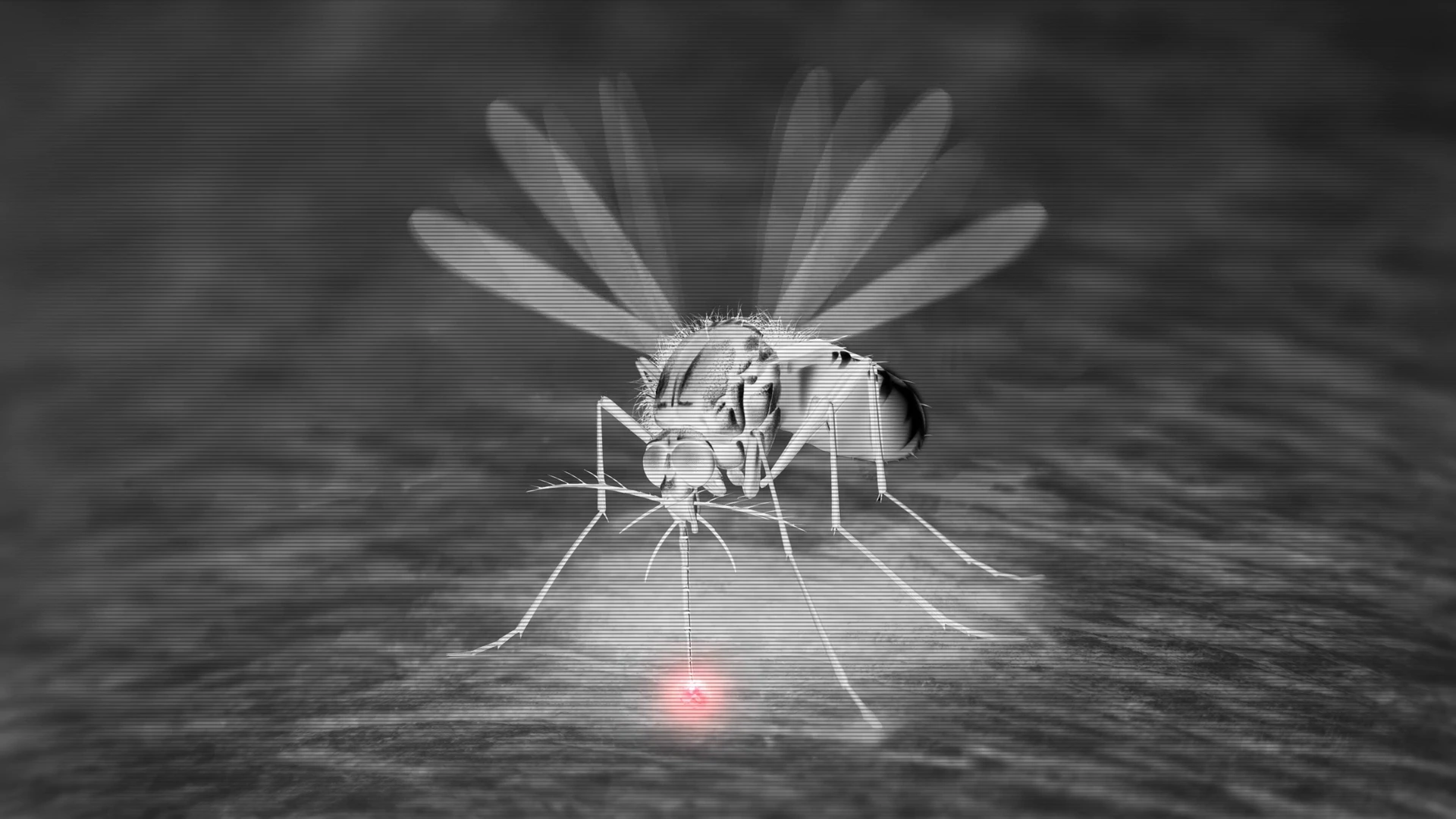
A mosquito acquires the chikungunya virus when it feeds on an infected person. The pathogen crosses its digestive system, multiplies and reaches the salivary glands, from where it passes to a new host with the next bite. To complete this journey, however, it must remain inside the insect for several days without causing irreversible damage. If it destroyed the tissues it uses or shortened the vector’s lifespan too much, it would also reduce its own opportunities to spread.
Research led by Pompeu Fabra University has identified one of the mechanisms behind this balance. The study, published in PLOS Biology, shows that chikungunya limits the production of its proteins in the tissues of Aedes albopictus, commonly known as the Asian tiger mosquito. The viral genome remains present and the infection continues, but its productive activity falls to a level compatible with cell survival. Experiments involving Zika revealed a similar pattern.
The finding helps explain a central paradox of vector-borne diseases: how can the same virus cause an acute infection in humans while remaining for long periods inside the insect that carries it?
The mosquito is more than a vehicle
Terms such as “carrier” or “vehicle of transmission” can make the mosquito sound like little more than a flying syringe. Its role, however, is far more complex. When a female bites an infected person, the microorganism must overcome several internal barriers, replicate in different tissues and reach the saliva. The vector, meanwhile, activates its defences and keeps the colonised tissues functioning.
This relationship usually results in a persistent infection: the arbovirus remains inside the insect and produces new particles without causing widespread destruction. That does not mean the infection is harmless. Depending on the species, viral strain and environmental conditions, it can cause changes in the arthropod’s lifespan, reproduction or behaviour. The main difference lies in the outcome: while humans may develop an intense acute illness, the invertebrate generally establishes a much longer-lasting coexistence with the pathogen.
This adaptation supports the epidemiological chain. To reach another human, the pathogen needs the female mosquito to survive long enough, feed again and retain its ability to fly, find hosts and reproduce.
Slowing down
Viruses need to use the machinery of the cells they infect in order to multiply. In the case of chikungunya, the UPF researchers observed that once a persistent infection became established in the insect, the viral material remained present, but the production of new proteins declined.
Rather than maintaining maximum activity and eventually damaging the tissue it depends on, the virus slows its pace. This allows it to remain inside the vector for longer and preserve the mosquito as a route of transmission.
Saying that it “knows when to slow down” is a way of explaining the process in simple terms. It is not a conscious decision, but an adaptation favoured by evolution.
Different organism, different behaviour
The research team identified two reasons why the virus behaves differently depending on the host.
The first involves control over cellular resources. In human cells, a viral protein enters the nucleus and silences part of the cell’s own machinery. With less competition, the viral instructions are processed more efficiently. In the insect, this protein does not reach the nucleus, so the shutdown does not occur. The virus must therefore compete with the cell for the same resources.
The second difference concerns the speed at which genetic instructions are read. Viruses use a code to produce their proteins, but these instructions are not processed equally well in every organism. Chikungunya contains many instructions that are initially slow to read in both humans and mosquitoes. In human hosts, the virus adjusts this system and accelerates its own production. In the insect, that adjustment does not occur, so protein production proceeds more slowly.
Both factors point in the same direction: the virus does not gain the same advantages inside the mosquito as it does in the human body. The result is sustained activity, but at a controlled level.
A pattern found in other viruses
To determine whether this slowdown was exclusive to chikungunya, the researchers repeated the analysis with the Zika virus, another arbovirus transmitted mainly by mosquitoes of the Aedes genus. Although it usually causes mild symptoms, it can lead to serious complications during pregnancy and affect foetal development. The result was similar: the viral genetic material remained present in the insect’s cells, but protein production decreased. The fact that two viruses from different families behave in this way suggests that reducing activity may be a more widespread strategy for remaining inside the mosquito without destroying it.
Dengue, which shares vectors with both viruses, was not included in the study. Confirming whether it follows the same biological pattern is therefore one of the next stages of the research.
Disrupting the balance to reduce transmission
Understanding how the virus manages to remain inside the mosquito without destroying its cells may open new ways of tackling diseases such as dengue and chikungunya. Many current strategies focus on preventing bites, reducing certain mosquito populations or stopping the virus from multiplying. This study points to another possibility: interfering with the mechanism that allows both organisms to coexist without causing serious damage to the insect.
One approach would be to prevent the virus from maintaining a stable infection and help the mosquito eliminate it. Another, still experimental, would involve disrupting the mechanism that controls viral activity until it reached levels capable of damaging the insect’s cells. The aim would be to make the mosquito unable to transmit the disease, without increasing the circulation of the virus.
For now, the experiments have been carried out only in laboratory-grown cells. The next step is to establish whether the same process occurs inside whole mosquitoes, assess its effect on transmission and identify a safe way to intervene without causing unintended environmental consequences.
Targeting transmission at its source
The expansion of Aedes mosquitoes into new regions has made vector biology increasingly relevant to public health. Monitoring human cases remains essential, but anticipating outbreaks also requires understanding what happens inside the organism that spreads the pathogen: in its tissues, in its immune response and in its interaction with the virus before the next bite.
The UPF study shows that the chain of transmission also depends on a microscopic balance: enough activity to maintain the infectious cycle, but not enough to destroy the site where the virus multiplies. For the Health Sciences, and for the education we promote at Universidad Mundae, findings like these highlight the value of connecting virology, molecular biology and epidemiology in order to anticipate and reduce the mosquito’s ability to transmit the virus to another person.
Understanding how this balance is maintained inside the insect adds an essential piece to the search for new ways to control arboviral diseases.

