


19 August 2026
A tongue swab to detect tuberculosis without going to the hospital
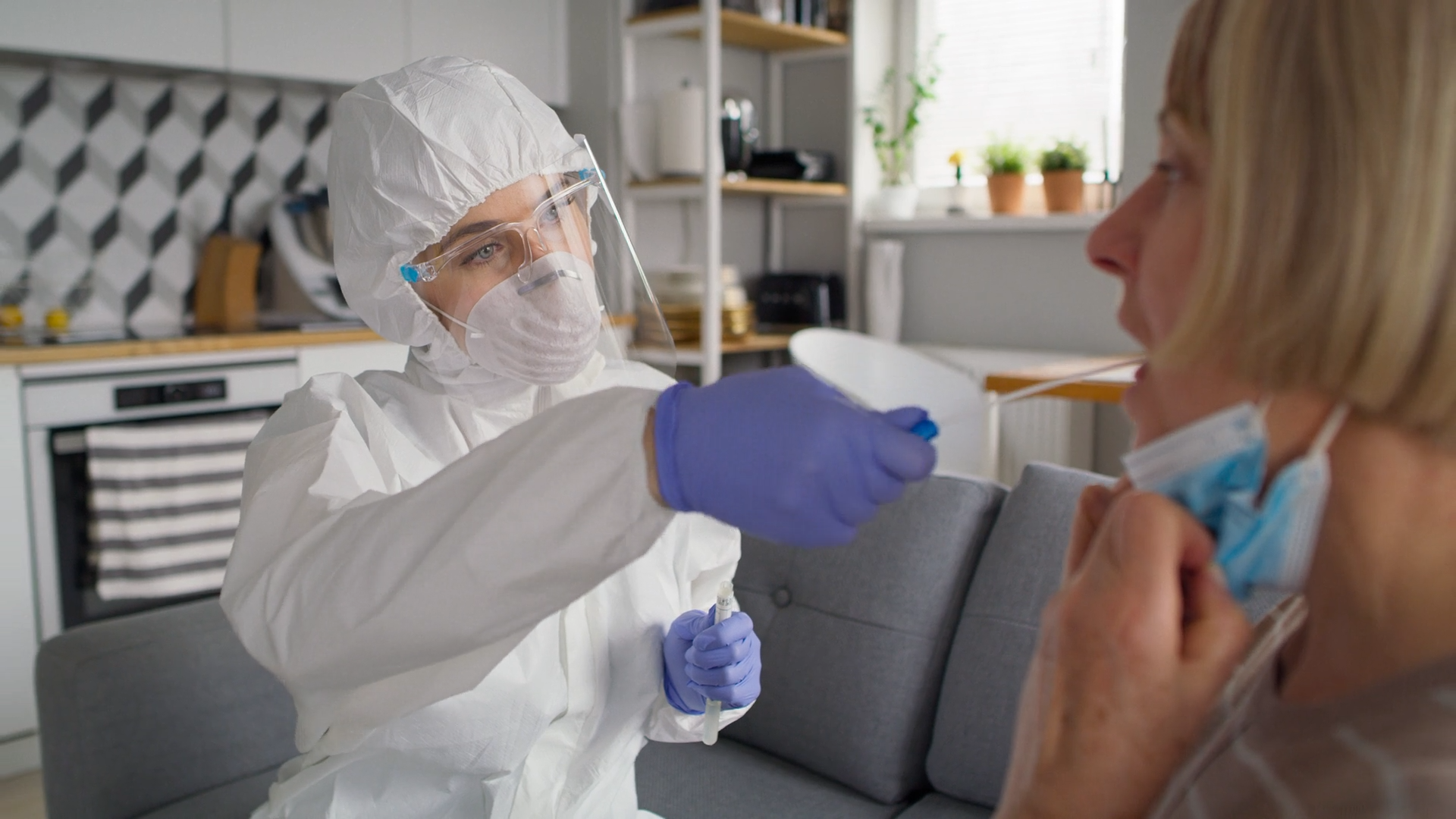
Tuberculosis detection has traditionally been associated with sputum samples and laboratories capable of identifying the presence of Mycobacterium tuberculosis. However, one of the diagnostic approaches that has advanced the most in 2026 relies on a much simpler sample: swabbing the surface of the tongue. The aim is not to turn diagnosis into a home test, but to simplify the process and bring it closer to primary care centres, mobile units or community settings where carrying out a molecular test may be more difficult.
This possibility is particularly relevant because tuberculosis remains a major global public health problem. According to the World Health Organization (WHO), around 10.7 million people developed the disease in 2024 and 1.23 million died from it. Although tuberculosis is preventable and curable, the challenge lies in identifying cases early and ensuring that diagnosis also reaches populations with more limited access to healthcare.
The challenge of obtaining a sputum sample
Pulmonary tuberculosis is usually diagnosed by looking for the bacterium or its genetic material in samples from the respiratory tract. Sputum coughed up by a patient can be analysed using highly accurate molecular tests and remains the preferred option whenever it can be obtained.
However, the procedure is not equally straightforward for everyone. Some people are unable to produce enough sputum spontaneously and may require methods to induce it. This difficulty can become a barrier in settings with limited resources, few specialised healthcare professionals or poor access to laboratories.
This is where an oral sample could change the process. During active pulmonary tuberculosis, material from Mycobacterium tuberculosis can become deposited on the epithelium of the mouth. The rough surface of the tongue can retain this material, allowing a swab to collect it so that bacterial DNA can later be detected using nucleic acid amplification techniques.
Thirty seconds on the tongue
Sample collection is simple: a sterile swab is rubbed over the upper surface of the tongue for around 30 seconds. The duration is not an insignificant detail, as the WHO warns that swabbing for less time may reduce the sensitivity of the test.
The sample must then be processed using a molecular system capable of detecting the bacterium's genetic material. The swab therefore does not provide a result by itself, but simplifies sample collection, which, when combined with portable devices, considerably reduces the infrastructure required.
One of the technologies evaluated recently is MiniDock MTB, a portable system that runs on battery power and analyses either sputum or tongue samples. The device searches for specific sequences of Mycobacterium tuberculosis through molecular amplification and can provide results in approximately 12 to 25 minutes once the sample has been processed.
What the latest studies show
A study published recently in The New England Journal of Medicine evaluated this system in 1,380 people aged 12 years or older with suspected pulmonary tuberculosis across seven countries in Asia and Africa. Of these, 226 had culture-confirmed tuberculosis.
Using tongue samples, MiniDock MTB correctly identified around 79.6% of confirmed cases and achieved a specificity of 99.5%, meaning it showed a very high ability to rule out the disease in people who did not have it. With sputum samples, sensitivity was higher, at 85.7%.
The results illustrate both the potential and the main limitation of this approach. A tongue swab can detect a significant proportion of cases using a sample that is much easier to obtain, but it can still miss infections identified by sputum-based tests, while its performance also decreases when the bacterial load is low.
Another study conducted across different centres and countries and published in The Lancet Microbe in May 2026 analysed tongue samples from 1,844 participants across eight countries using Xpert MTB/RIF Ultra. Compared with sputum culture, overall sensitivity was 65.6% and specificity was 98.5%. Once again, detection improved when the bacterial load was higher.
The WHO has already changed its recommendations
The growing body of evidence in this area has led to a step that goes beyond the studies themselves. In March 2026, the WHO recommended tongue swabs for the first time as a diagnostic alternative for adults and adolescents with signs of pulmonary tuberculosis who are unable to provide a sputum sample. The measure forms part of a broader move towards new molecular tests designed to be carried out close to where patients receive care, without relying on large laboratories.
This recommendation does not replace the usual procedure, since whenever a respiratory sample can be obtained, it remains the preferred option because it provides greater accuracy. The real change is intended to open up a diagnostic route for people who might otherwise be left without bacteriological confirmation of the disease.
Bringing the test to the patient instead of moving the patient
This change in location and the speed of the process can be just as relevant as the sample itself. In areas with a high burden of tuberculosis, having to travel repeatedly to a hospital or transport samples to specialised laboratories can delay diagnosis. The more intermediate steps there are between suspicion, testing and obtaining a result, the greater the risk that the process will be interrupted before treatment begins.
A procedure based on an easy-to-collect swab and a portable device makes it possible to consider different diagnostic pathways. Samples can be collected closer to where the patient lives and, in certain circumstances, even by the person themselves following instructions from trained staff. This does not turn the procedure into a self-test, but it does reduce some logistical barriers.
There are also limitations. Some near-point-of-care tests detect tuberculosis but do not provide information about resistance to rifampicin, one of the key antibiotics used in treatment, meaning that a positive result may require additional testing. In addition, evidence in children is still insufficient to extend the same recommendations to this population.
A simple sample for a complex problem
The innovation lies not only in finding another way to detect the disease, but also in changing where and how diagnosis can begin. A sample collected in seconds is of little value if it then has to go through an inaccessible diagnostic pathway; combining simple sample collection with portable molecular technology, however, can bring testing closer to people who currently face the greatest difficulties in accessing diagnosis.
Tongue swabs do not yet replace sputum samples, and their results still require caution, particularly when the bacterial load is low. But the WHO's support in 2026 marks a significant shift: a simple, easy-to-collect tool has gone from being a possibility investigated for years to forming part of recommended strategies to expand access to tuberculosis diagnosis.

