


21 May 2026
Rehearsing a difficult situation before experiencing it: virtual reality, autism and safety
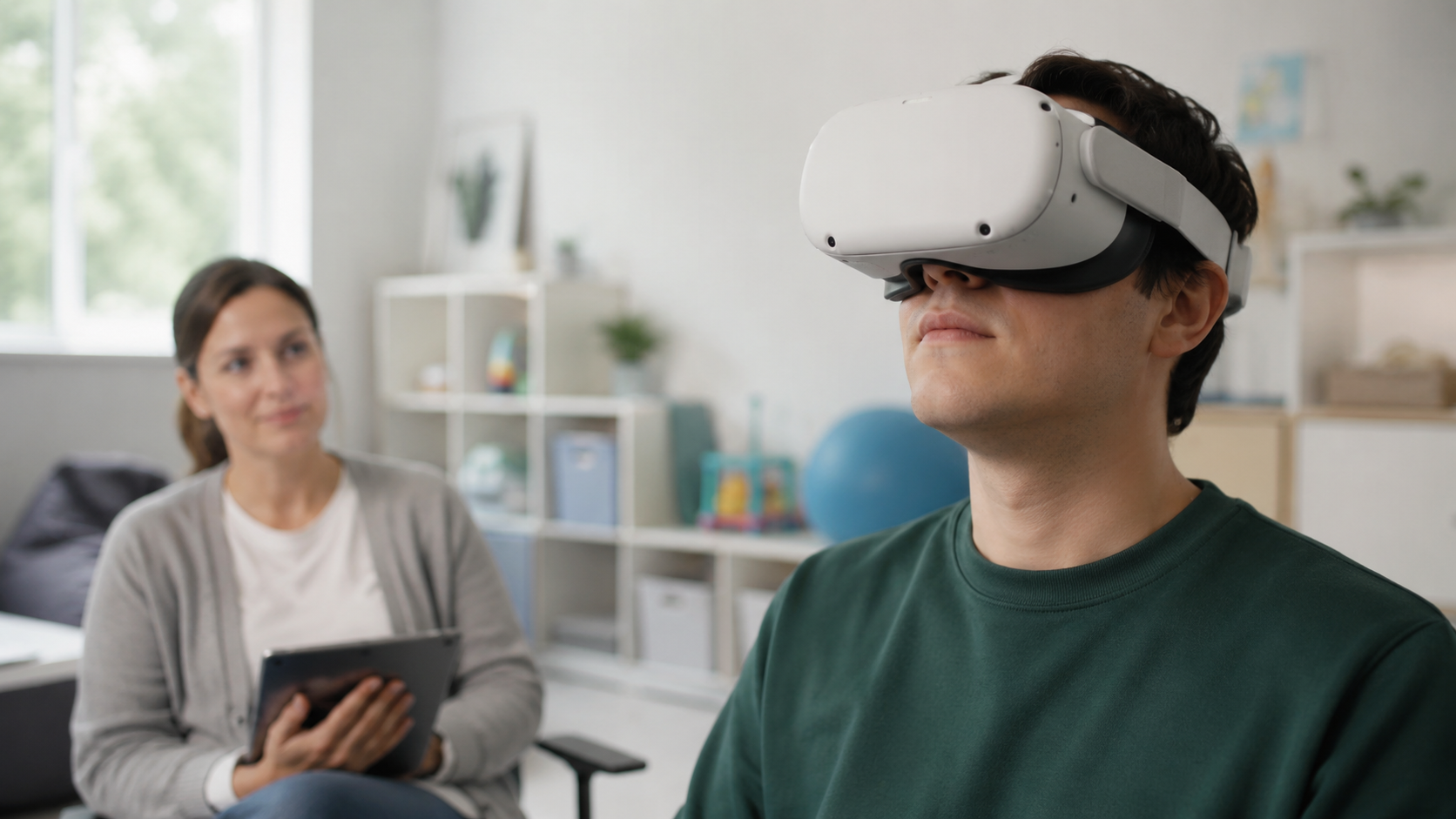
There are situations that may seem routine for many people: answering a question, following an instruction, keeping your hands visible, looking at someone who is approaching or explaining who you are in just a few seconds. But in certain contexts, especially when there is pressure, noise, lights, authority or fear, those actions can stop being simple.
For an autistic person, an unexpected encounter with the police can bring many of those elements together at the same time: rapid instructions, body language that is difficult to interpret, forced eye contact, intense sensory stimuli and a very specific social expectation about how someone "should" behave in that situation, an expectation that is not always easy to know how to meet. The problem is not always in what the person does, but in how it is interpreted from the outside.
That is why recent research has focused on a question as specific as it is relevant: can virtual reality help autistic people better prepare for an interaction with police officers before experiencing it in the real world?
The answer, for now, seems promising. A randomized clinical trial published in May 2026 in Journal of Autism and Developmental Disorders analyzed a virtual reality intervention designed for autistic adolescents and adults to practice interactions with police officers in an immersive, controlled and repeatable environment. The study included 47 autistic participants between the ages of 12 and 60, divided between a virtual reality module (Floreo Police Safety Module) and a video-based intervention, BeSAFE The Movie. Both groups completed three 45-minute sessions, spaced on average about nine days apart.
Misinterpretation
One of the keys to the study lies not only in the technology it uses, but in the context it seeks to address. Interactions with police officers can be a significant source of stress for vulnerable populations and, in many cases, easily misunderstood. In the case of autistic people, some characteristics associated with neurodevelopment, such as differences in eye contact, repetitive gestures, difficulties processing verbal instructions quickly or unconventional responses to anxiety, can be mistaken for nervousness, avoidance, defiance or lack of cooperation.
The difference matters. It is not the same to not want to cooperate as it is to not understand what is expected at that moment. It is not the same to look away because of sensory discomfort as it is to avoid a question.
That distance between behavior and interpretation can grow very quickly in tense situations, and this is where contextual preparation becomes valuable: not to turn the autistic person into someone who "acts" neurotypically, but to familiarize them with the scenario and reduce the risk of friction in real-life situations where the consequences can be critical.
Practicing without risk
Virtual reality has been used for years in contexts of training, clinical simulation and skills development, but its value does not lie only in the level of realism it can achieve. It lies in the fact that it allows a situation to be repeated without exposing the person to all the risks of the real situation.
In this case, the intervention allowed participants to practice very specific skills: answering questions, keeping their hands visible, managing the presence of an officer, receiving instructions or working on certain behaviors that could be interpreted negatively in a real encounter. The virtual environment also makes it easier to introduce variations: different officers, different noise levels, the presence of lights, more or less tension, changes in the setting.
This possibility of repeating, adjusting and scaling is especially relevant. Many social skills are not learned simply by explaining them; they are learned by experiencing them, practicing them and receiving feedback in an environment where making a mistake does not imply a real consequence.
For this reason, virtual reality should not be understood as a video game or as an isolated tool. In this study, the module was applied within a cognitive-behavioral approach, with defined objectives, guided practice, observation and feedback from a monitor. In other words, technology functioned as the setting, but the intervention still required professional judgment, support and therapeutic design.
Changes after the sessions
Both groups in the research, the virtual reality group and the video modeling group, acquired skills during subsequent interactions. However, the virtual reality group showed a specific reduction in fidgeting behaviors during live interactions with officers, something that was not observed in the same way in the video group. Improvements were also identified in response and in overall behavior during real interactions, especially among those who had practiced with virtual reality.
The most valuable part is that the study did not limit itself to asking participants whether they felt better prepared. The evaluation included a subsequent interaction with real officers or uniformed personnel, recorded and analyzed. This provides a measure closer to real life than a simple subjective perception.
Even so, the results should not be overstated. The study was small, worked with verbally fluent participants and used specific inclusion criteria, so it does not represent all autistic people or all support profiles. The analyses themselves point to the need to replicate the results in larger and more diverse samples.
The conclusion, therefore, is not that virtual reality solves the problem. The conclusion is more interesting: practicing difficult situations in immersive environments can help some autistic people acquire skills that can be applied outside the simulation.
The other side of the interaction
There is an essential point: not all the responsibility should fall on the autistic person. Safety cannot depend solely on someone learning to respond in the way the system expects. It is also necessary for professionals involved in emergency, security, health or social care situations to know how to recognize neurological diversity and adapt their response.
The study itself points out that the long-term solution must include training so that police officers and other professionals act with greater understanding, empathy, alternative strategies and capacity for containment. While those changes are being implemented, offering practice tools to autistic people can be useful, but it should never replace the institutional training of those who hold authority in an interaction.
This nuance is important because it avoids an unfair reading: technology should not serve to ask neurodivergent people to fit better into poorly prepared systems. It should serve to create safer bridges between the person, the environment and the professionals involved in it.
Training the gaze that supports
The logic of preparing professional judgment with the same seriousness with which knowledge is transmitted is at the heart of how Psychology is taught at Universidad Mundae. Understanding autism, neurodivergence or any complex human reality is not learned only from books: it is learned by observing, practicing, making mistakes in safe environments and trying again with more resources. That is why training that combines scientific foundations, clinical simulation and supervised practice from the first years is not a luxury, but the most honest way to prepare those who will support, in consultation or in any other context, people whose experience of the world does not always fit into what is predictable.
Arriving with more resources
The research is modest in terms of its scope, but it opens up a question worth exploring further: what other everyday situations (in medical consultations, classrooms, social services) could benefit from a prior rehearsal that reduces tense situations before they happen?
Because sometimes, rehearsing a difficult situation before experiencing it is not a way of overprotecting from reality. It is a way of reaching it with more resources.

