


20 July 2026
What if life on other worlds were detectable, but we did not know how to interpret it?
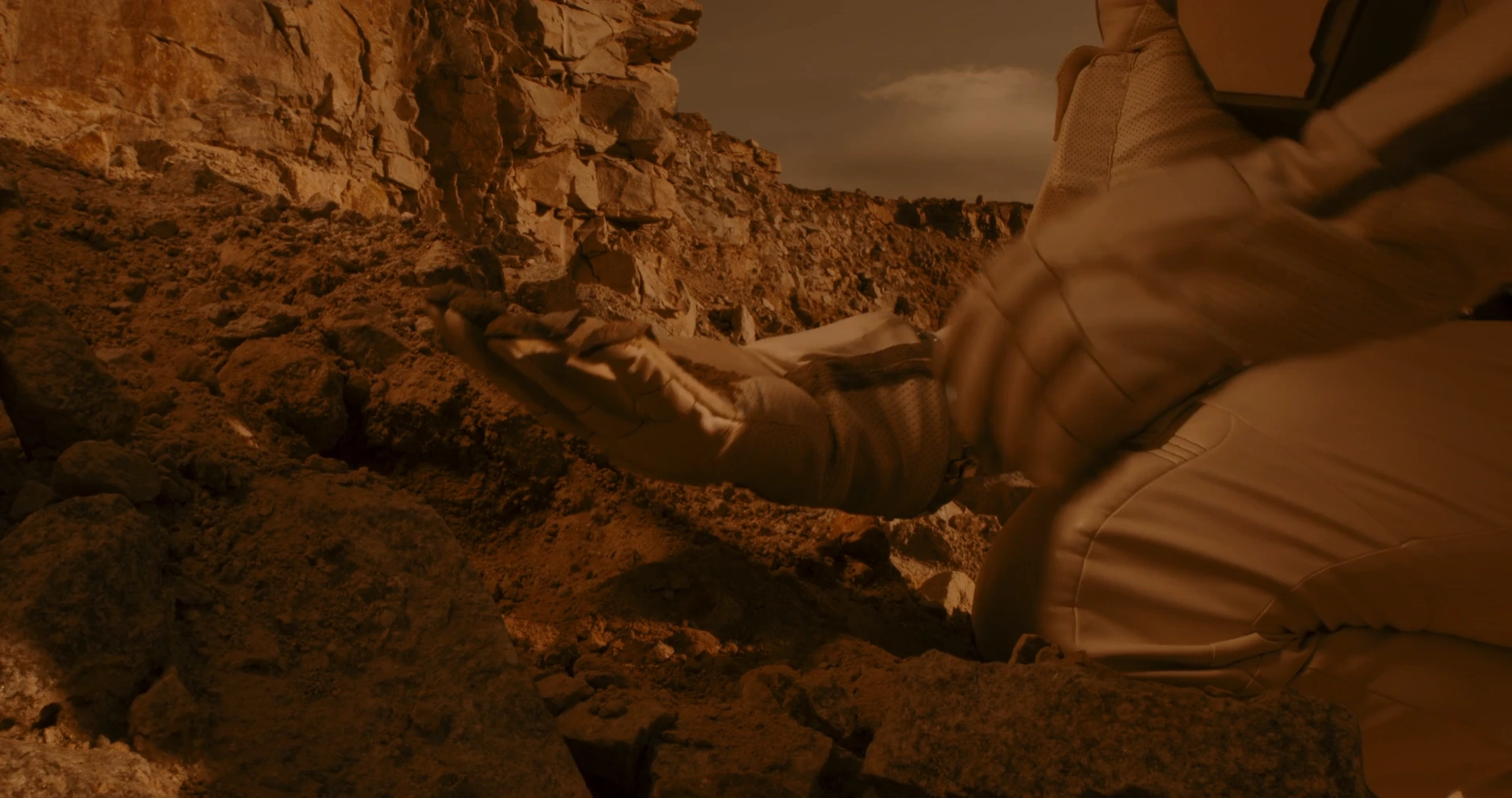
When a space mission searches for signs of life beyond Earth, it rarely expects to find an organism directly in front of a camera. Instead, scientists usually analyse an atmosphere, heat a soil sample or study minerals and molecules that may have been transformed by living organisms. The outcome depends on several factors: where the search takes place, what material is collected, what the instrument is capable of measuring and how the data are interpreted. However, recent research raises another possibility: some signs may already have been within our reach, but we may not have recognised them for what they were.
In astrobiology, these signs are known as biosignatures. They can include gases, organic compounds, pigments, microscopic structures or chemical imbalances. For years, much of the scientific effort has focused on avoiding false positives, which occur when something produced by geological or chemical processes is mistakenly interpreted as biological. However, the opposite error is also possible: concluding that nothing is there when life is present or has left traces, but those traces do not match what we currently know how to detect.
This is the starting point of an article published in Nature Astronomy in May 2026. Its authors warn that false negatives still receive relatively little attention in scientific planning, even though they can arise at almost any stage of the process. Organisms may be present in extremely small quantities, remain inactive or be located in an inaccessible area. Their products may also fail to survive, remain hidden by the surrounding environment or fall below the detection limit of the equipment being used.
Location provides one of the clearest examples. A planet may appear sterile if scientists examine the wrong place. On Earth, some communities live beneath rocks, inside minerals or deep within sediments. Their traces can also be degraded by radiation, transformed by heat or mixed with other materials until their concentration becomes too low to identify. A sample may contain information of biological origin and still produce a negative result because the environment has altered what scientists were trying to measure.
The history of the Viking probes shows how the analysis itself can modify the material it is trying to detect. In 1976, their instruments heated samples of Martian soil to study the gases they released. Among them were chloromethane and dichloromethane, two compounds that were initially attributed to possible contamination from Earth. Decades later, the discovery of perchlorates on Mars opened the door to another explanation. In experiments using soils from the Atacama Desert, researchers found that when a sample containing organic matter and these salts is heated, the original compounds can break down and produce chlorinated molecules similar to those detected by Viking.
The results do not reveal whether that organic matter came from Mars or whether it had a biological origin. What they did show is that Viking’s procedure may have transformed possible organic compounds before identifying them. The molecules produced during the analysis were dismissed as contamination, even though they could also have formed when material already present in the soil was heated. The case therefore represents a possible false negative: not because the probes had discovered life, but because a potentially relevant sign may have been altered and overlooked.
Earth itself shows that a planet containing life does not always display easily detectable signs. For much of its history, the levels of oxygen, ozone and methane in the atmosphere would have been too low for a distant observer to identify clearly. In other words, our planet may have appeared uninhabited for billions of years, even though organisms were already living on it.
Biological activity was not absent; its effects simply did not always accumulate in the atmosphere in a way that could be detected from great distances. A gas produced by microorganisms may dissolve in the ocean, react with minerals or break down before reaching a measurable concentration. As a result, a biosphere may be widespread, active and stable, yet remain hidden from a telescope. The absence of an expected gas does not automatically mean that organisms are absent.
This limitation is especially important in the study of exoplanets, where it is impossible to collect a rock or drill into the ground. Information reaches us through light, but clouds may hide lower atmospheric layers, different compounds may produce similar features and some substances may exist in concentrations that are too low to detect. For this reason, searching for a single molecule as definitive proof is not enough. Scientists must interpret gases, environmental conditions, geological activity and the planet’s evolution within the same context.
To reduce this risk, the authors propose taking it into account from the mission design stage. Before deciding which instrument to send, researchers should develop specific hypotheses about what forms of life might exist, where they might be found and what traces they could produce. They also recommend combining laboratory experiments, computer models and fieldwork in extreme environments on Earth. Analysing the same sample with different techniques may reduce the risk that one method destroys, transforms or overlooks a sign that another could have identified.
Artificial intelligence could also help in the future by finding patterns that might otherwise go unnoticed in conventional data analysis. It would not be able to confirm the existence of life on its own, but it could highlight combinations or changes that deserve closer study. Scientists would then need to determine whether those signs could instead be explained by geological, chemical or physical processes.
Paying closer attention to false negatives also changes the meaning of “finding nothing”. Such a result may indicate that a location is empty, but it may also mean that too little material was collected, that the trace had degraded or that the instrument was searching for an overly specific marker. This distinction affects which destinations are prioritised and which technologies receive funding. Declaring a place sterile too early could lead scientists to abandon a promising investigation or alter an ecosystem that they still do not know how to recognise.
In conclusion, the search for life beyond Earth has long been associated with the ability to travel farther and develop increasingly sensitive instruments. However, this new approach shows that scientists must also broaden their search processes, combine different methods and reconsider how results are interpreted. The absence of an expected indicator does not necessarily allow us to rule out the existence of life altogether. The challenge is therefore to distinguish between a truly uninhabited planet and a form of life whose traces we have not yet learned to recognise.

